Changing Room and A Study on Waitressing
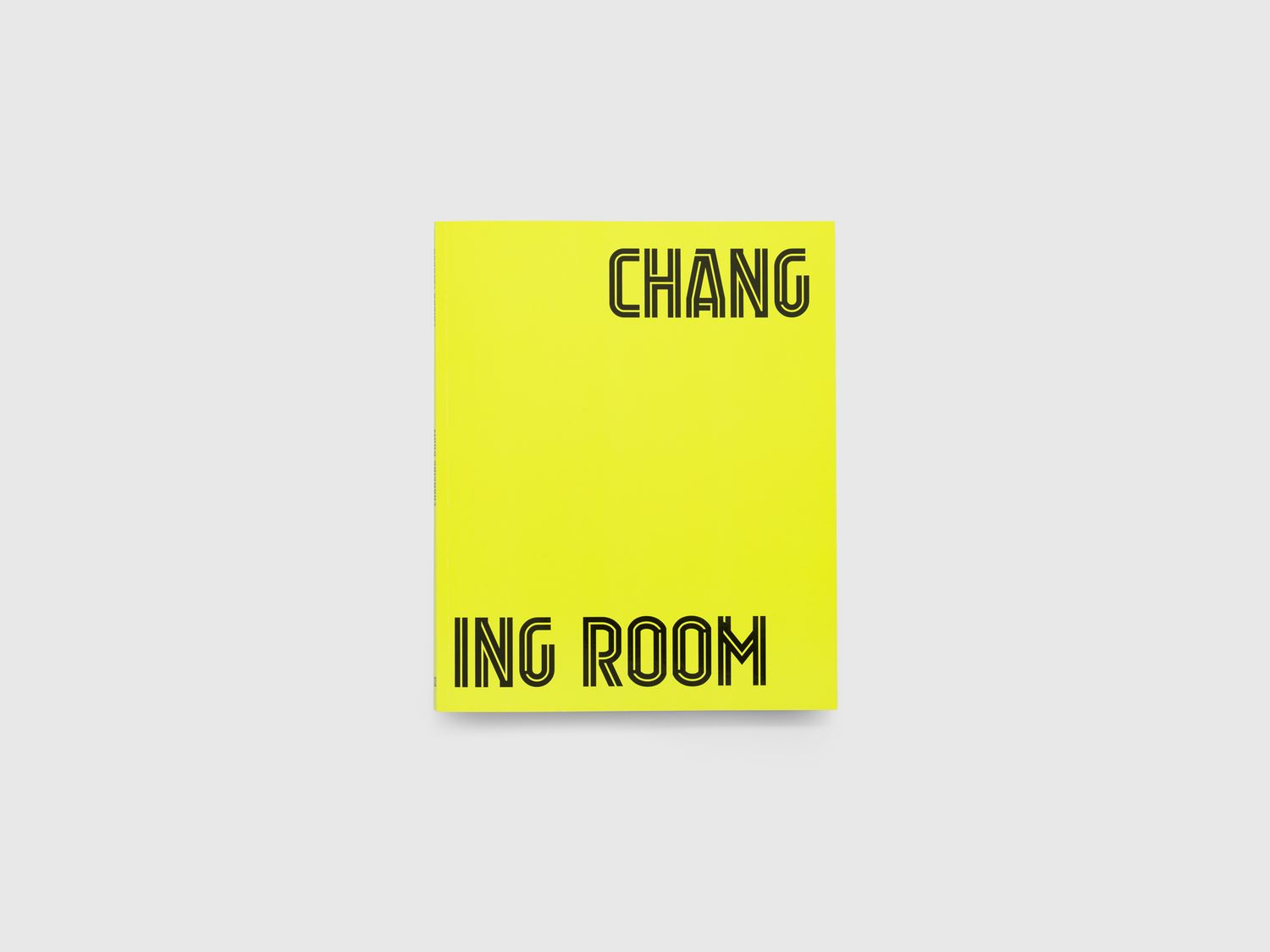
Changing Room
Chiara Calgaro
Texts by Alma Sammel, Deniz Nihan Aktan
Translations by Sara Madonia
Book design by Melissa Pallini
2025
Altana
116 pages
500 copies
Changing Room explores the question of gender identity through one of the most influential cultural phenomena in the world: football.
Chiara Calgaro begins her photographic journey with the team she plays for — a self-managed, self-funded collective made up of women*, trans, and non-binary people — and continues with a journey across Europe in search of other queer teams.
With faces often obscured, the athletes’ bodies bend, twist, and perform for the camera, just as every individual “performs” throughout life behaviors expected to match the gender assigned at birth.
Through the enactment of “parody-gestures”, the artist suggests the possibility of reimagining gender identity within a more nuanced and complex narrative — one that permeates social spaces starting from the dimension of play.
The football team’s changing room becomes a microcosm for experimenting with practices that challenge those dominant in society, suggesting new forms of collectivity and participation, and using the world’s most popular sport as a tool for self-determination.

A Study on Waitressing
Eleonora Agostini
Text by Joanna Walsh
2024
Witty Books
168 pages
Eleonora Agostini's A Study on Waitressing is a multi-layered investigation on waitressing used as a metaphor to explore ideas of gender behaviours, societal expectations, and performing in and for the public.
The work scrutinizes the fictionalized image of the ‘waitressing woman’, by exploring the stage, the backstage, and the performative aspects of this role.
Agostini looks at mundane gestures and postures, commonplace objects and materials, strategies and visual codes of the service industry context to reflect upon power and gender dynamics, labour, representation, and the gaze.
Central to the project is the figure of Agostini’s mother, whose postures, movements, and behaviours serve as a focal point. This figure becomes a vehicle to explore the visible and hidden aspects of identity, emphasizing the social roles performed in daily interactions. The restaurant setting acts as a microcosm where the body mediates between observer and observed, highlighting the theatricality inherent in everyday life.
A Study on Waitressing delves into the relationship between labour and personal life, between vulnerability and strength, between the public and private, between the observer and the observed, and between a mother and daughter.